Welcome to Russia
Official Name: Russian Federation
Form of Government: Federation
Capital: Moscow
Population: 144, 125, 000
Official Language: Russian
Money: Ruble
Area: 17, 075, 200 square kilometres
Major Mountain ranges: Ural, Altay
Major Rivers: Amur, Irtysh, Lena, Ob, Volga, Yenisey
Russia: geography and landscape
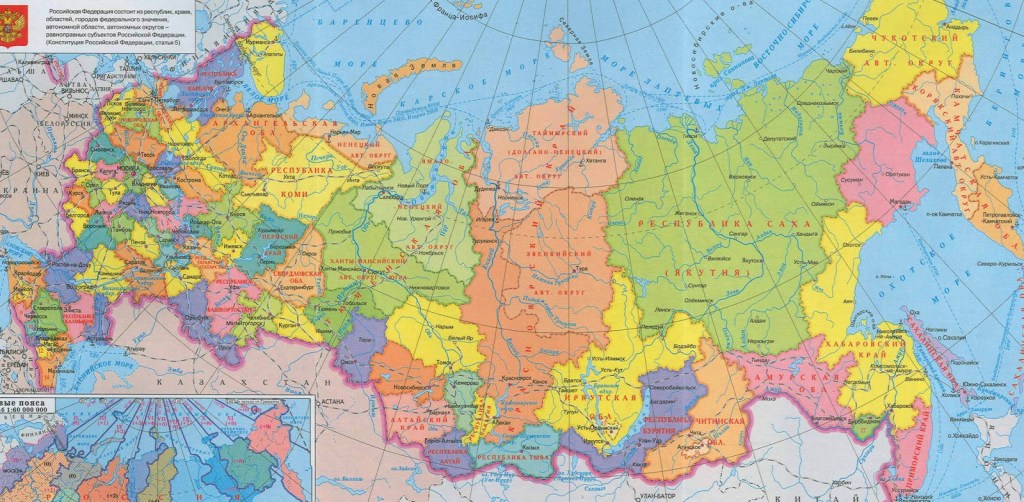
As the world’s largest country, Russia occupies one-tenth of all the land on Earth. It spans 11 time zones across two continents (Europe and Asia) and has shores on three oceans (the Atlantic, Pacific and Arctic Ocean).
The Russian landscape varies from vast deserts to frozen coastline, tall mountains to giant marshes. Much of Russia is made up of rolling, treeless plains called “steppes”. The region of Siberia, which occupies three-quarters of Russia, is dominated by sprawling pine forests called “taigas”.
The Russian landscape varies from desert to frozen coastline, tall mountains to giant marshes
Russia has around 100,000 rivers, including some of the longest and most powerful in the world. It also has many lakes, including Ladoga and Onega (Europe’s two largest lakes), and Lake Baikal, which contains more water than any other lake on Earth.
Russia Population 2019
145,917,192
There are no official figures for the population of Russia in 2016, but the 2010 census, the results of which were released in late 2011 and early 2012, reports that the official population of Russia was 142.9 million. The most current estimate for 2019 reports that the population is around 145.87 million.
The Census results are probably the most reliable indicator, but other estimates of the Russia population are available. Rosstat, the official Government statistics agency, suggested that the population of Russia in 2011 was 141.8 million, and the CIA estimated that the population was even lower: 138.7 million.
Russia Area and Population Density
Russia is one of the few countries with a negative growth rate, and its 2019 population is estimated at 145.87 million, a decline from an estimated population of 146.3 million in 2015. It’s currently the 9th most populous country on earth, despite being the largest by area.
Like most countries, Russia undertakes a census every decade or so. There is no fixed schedule, though, and until 2009 it was not certain that the 2010 census would even take place. It was only a late intervention from the Russian Government, allocating 10 billion roubles, that prevented it from being pushed back to 2013.
The full Russian census results were released in sections throughout 2011 and 2012; these can be viewed at the official Russian Census website (in the Russian language).
For the headline figures, this Russian population infographic created by Russian news agency RIA Novosti is informative.
The estimated 2014 population of Russia, which was 142.5 million, was pretty interesting, as Russia released its latest batch of data, as reported by Forbes. This information shows that Russia’s run of increasing births and decreasing deaths may be ending. From January to March 2013, the number of births shrank by about 4,000, while the number of deaths increased the same amount. This means the natural loss of population was about 20% larger than in the previous year.
Russia’s natural change in population over the past twenty-five years has been fairly unstable, decreasing in the early 90s, leveling out and then climbing beginning in 2005 before leveling out again.
Largest Cities in Russia
Moscow is the largest city in Russia with a population of 12.1 million people, which also makes it the 11th largest city in the world. Saint Petersburg is the second largest Russian city, with 5.1 million people, making it the 50th largest city in the world.
Interestingly, Russia is one of the most sparsely populated countries in the world, in part due to its harsh climate. The country has a population density of just 8.4 people per square kilometer (22 per square mile), but the population is most dense in the European area of the country around Saint Petersburg and Moscow.
Russia is mostly an urban country; according to the census results, 74% of Russians live in urban areas — either towns or cities. Ten other Russian cities have a population of more than a million people.
Interestingly, the population of Russia’s cities has increased over the past ten years, reflecting the increasing urbanization of Russia as people move from the countryside to cities in search of better employment.
Russian Demographics
As you can see from the graphic, almost half of all Russians live in just two areas: the Central and Volga federal districts. The further east you go —to Siberia and beyond — the less dense the population is.
The graphic also demonstrates that Russia is a fairly ethnically diverse country. Although almost 81% of Russian citizens identify themselves as ethnic Russians, there are also other large ethnic groups. 3.9% of Russians are Tartars, 1.4% Ukrainians, 1.2% Bashkirs, 1.1% Chuvashs and 1.0% Chechens. 3.9% of the population did not declare any ethnic origin.
In total, there are more than 185 different ethnic groups in Russia. Russian is the official language of the country and spoken by almost everyone. There are a total of 35 official languages in Russia, and more than a hundred other languages that do not have official recognition. Some are close to extinction.
Russia Religion, Economy and Politics
The Russian state religion is Orthodox Christianity. There is no official census data on religion, but a 2012 survey indicated that 41% of Russians were Russian Orthodox Christians, 13% were non-religious, 6.5% were Muslims, and 5.5% were «undecided.»
Russia Population History
The Russian population has been steadily declining for almost two decades now. When the Soviet Union collapsed in 1991, the population of Russia was recorded at 148,538,000.
Over the next decade, the population decreased at a fairly steady rate of a half percent per year. The causes for this were twofold. Firstly the number of people dying increased due to a fall in living standards, and among men who were hit hardest, alcoholism. The average life expectancy for women held fairly steady at 75 years, but Russian male life expectancy dropped dramatically to 63 years.
Combined with this, birth rates fell sharply as well. From around 17 per 1,000 persons in the mid 1980s, the rate fell to below 10 per 1,000 in the mid-1990s – well below the rate needed to sustain a population. Economic uncertainty was a major factor in this, persuading people against having children.
Russia Population Growth
The Russian economy grew strongly during the first decade of the 20th century, and in 2009 the Russian population saw a small but significant increase. The increase was reported as between 15,000 and 25,000 people and was attributed to a falling death rate and increasing migration.
There are also indications that birth rates may be increasing slightly – probably due to a combination of increased confidence in Russia’s economic prospects and government incentives to new mothers especially a $10,000 payment which is made to mothers who have three or more children.
Population growth and demographics have long been a problem for Russia, as a decade ago the nation was losing 1 million people a year, and many doubt Vladimir Putin’s plans will work. Time will tell if Russia is able to overcome its issues and see greater growth, as otherwise it will be prone to collapsing infrastructure with its massive land area and untapped natural resources.
Russia Population Projections
The rate of change of the Russian population is very close to 0% at present and the population isn’t expected to change much by 2020. Further in the future, it is expected that the population will continue to decline slowly, getting down to 140 million by 2030, and 136 million by 2040.
 RUSSIA